Why More Players Are Joining Basketball Club Teams in San Diego
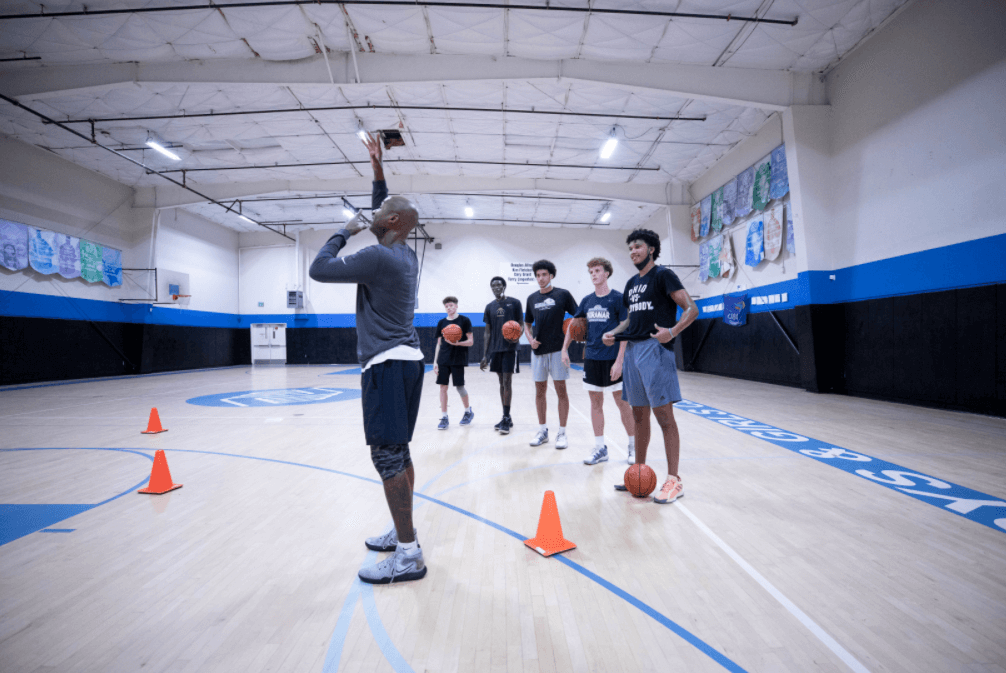
Walk into almost any gym in San Diego on a weeknight and you can feel the change. Ten years ago, a lot of young players relied on school ball, city leagues, and whatever pickup runs they could find. That path still exists, but it is no longer enough for many families. More players are joining club programs because the game has become more competitive, the development model has changed, and parents have grown more selective about where their kids spend time.
The rise of Basketball Club Teams San Diego families are talking about is not just a trend driven by hype. It reflects a real shift in how players train, how coaches evaluate talent, and how young athletes build confidence before they ever play in a high school varsity game. For some kids, club basketball is the first place they are truly challenged. For others, it is the first environment where they get quality teaching instead of just rolling a ball onto the floor and being told to scrimmage.
There is also a practical side to all of this. San Diego is large, spread out, and diverse in both talent and opportunity. A player in North County may not have the same school situation as a player in East County or South Bay. Club basketball often becomes the bridge. It gives players access to stronger competition, specialized coaching, and teammates who care enough to train year-round.
That does not mean every club is worth the investment, or that every player needs one. But it does explain why so many families are looking more seriously at the club route than they did even a few years ago.
The game asks more of young players than it used to
One reason club basketball has grown is simple. The standard has risen.
At the youth level, even the average player is more skilled than before. Ball handling starts younger. Shooting instruction is more sophisticated. Strength and movement work show up earlier. Film is easier to access. Kids can watch high-level footwork, spacing, and decision-making any day of the week. That exposure changes expectations.
A middle school player who once stood out because he played hard and could finish layups may now be competing against guards who can change pace, shoot off the catch, and make live-dribble reads. A wing who used to dominate with pure size may suddenly look ordinary when matched against athletic, well-trained kids from across the county.
School programs can do a lot, but many simply do not have enough time to develop all of those layers. A school coach has to manage a roster, install team concepts, prepare for games, and work within seasonal restrictions. Club programs, when run well, can spend more time on the individual work that moves a player forward. That is a major reason families seek them out.
I have seen this play out with players who were stars in local rec leagues and then hit a wall around seventh or eighth grade. They were good athletes, competitive kids, but their reads were slow and their footwork was loose. Within a few months in the right club setting, they started catching the ball lower, attacking more decisively, and defending with much better angles. The talent did not suddenly appear. The environment finally demanded it.
San Diego is a natural market for club basketball
Some cities produce club growth because there are few alternatives. San Diego is different. It has a healthy basketball culture already. High school programs have history. Community rec leagues are active. Outdoor courts stay busy much of the year. Private skill trainers are easy to find. That actually helps club teams, not hurts them.
Club basketball thrives in places where there is both demand and infrastructure. San Diego has both. Families are willing to drive for the right fit. Facilities, while never plentiful enough, exist across the county. Tournament travel is manageable compared with more isolated regions. Southern California as a whole provides a steady stream of competition, which means club programs can test players without asking families to fly every other weekend.
The weather matters too, even if people do not always mention it. Year-round training is easier in a city where outdoor conditioning and flexible scheduling are realistic. Players can stack school workouts, individual training, and club practices without fighting severe weather disruptions for months at a time.
There is also the simple fact that San Diego families tend to be active and sports-aware. Parents compare notes. They hear where serious coaching is happening. They notice which programs actually improve players and which ones mainly sell gear and promises. Over time, word gets around.
That is part of why Basketball Club Teams San Diego options have multiplied. The market rewards programs that deliver real development and exposes the ones that do not.
Families want development, not just games
A lot of parents used to judge a basketball experience by how many games their child played. That is changing. More families now understand that a packed tournament schedule means very little if the player is not getting better.
The strongest club programs in San Diego have responded by putting skill development back at the center. They still compete, of course, but they also build training plans around footwork, shooting mechanics, body control, defensive habits, and decision-making. Good coaches know that weekend results at age 12 or 14 do not tell the whole story. A team that wins now by pressing and overpowering weaker opponents may not be helping its players long term.
Parents notice the difference. They can tell when a practice has structure. They can see whether a coach teaches or just talks. They can watch whether mistakes become learning moments or whether the gym runs on fear, volume, and blame.
One family I know moved their son from a flashy travel team to a smaller local club after one season. The first team played a lot, traveled a lot, and wore impressive uniforms. The second team practiced harder, corrected details, and had less social media presence. Within six months, the player was noticeably better. His jumper was quicker. He stopped picking up his dribble under pressure. He became a useful defender instead of a kid who gambled for steals. The family spent less on travel and got far more value.
That story is common. Families are not just buying access anymore. They are buying instruction.
Exposure matters, but it means different things than people think
The word exposure gets thrown around constantly in youth basketball, and it often creates confusion. Many parents hear it and think college recruiting. For younger players, exposure usually means something more immediate and more realistic.
It means being seen by stronger coaches. It means competing against better players. It means getting out of a comfort-zone environment where everyone already knows your child is one of the top players in the local gym.
That kind of exposure has value. A player who dominates a weak league may never be forced to develop counters. Put that same player in a competitive club circuit, and the game changes fast. Defenders sit down earlier. Closeouts are sharper. Ball pressure is real. Suddenly the player has to think, adjust, and execute under stress. That is development through competition, and it is one of the best reasons to join a serious club program.
For high school players, there can also be legitimate recruiting benefits, especially for those who need visibility beyond their immediate school schedule. But that should be viewed with some balance. Not every event is a recruiting event. Not every player needs a national schedule. Sometimes the best exposure is simply being on a well-coached team that plays good regional competition and helps a player improve enough to stand out later.
Club teams can fill gaps that school programs cannot
This is not a criticism of school basketball. Many school coaches do excellent work. The challenge is structural.
A school season is limited. Rosters are tied to enrollment boundaries. Practice time can be tight. Some schools have deep talent pools and stable coaching staffs. Others do not. A player may be in a school situation that is positive socially but limited competitively, or competitive but not especially developmental.
Club basketball can compensate for those gaps. It can place a player among peers with similar ambition. It can https://tysonwpzv631.trexgame.net/how-basketball-club-teams-san-diego-prepare-athletes-for-college offer specialized instruction for positions that school practices may not have time to cover. It can create continuity through the offseason when players would otherwise scatter into unstructured runs and uneven training.
This matters a lot in San Diego, where talent is spread across many neighborhoods and school systems. A club team can bring together guards from one part of the county, forwards from another, and role players who might never cross paths in school ball. That mix often raises the standard for everyone.
It also helps late bloomers. A player who is not yet physically mature may not stand out in a school tryout setting where size and speed dominate. In the right club environment, that same player may have time to grow into his game, especially if the coaching emphasizes skill, spacing, and IQ.
The social side is stronger than many adults realize
Young players do not join club teams only to chase rankings or sharpen their crossover. They also join because they want to belong somewhere that takes the game seriously.
That piece matters. Kids notice when teammates arrive early, work hard, and care about details. They respond to peer standards as much as coaching standards. A player who drifts in a casual rec environment may lock in on a club team simply because the rest of the group sets a different tone.
There is a healthy version of this and an unhealthy one. The healthy version builds accountability, friendships, and resilience. The unhealthy version turns every missed shot into a crisis and every team decision into drama. The best Basketball Club Teams San Diego families seek out know how to create intensity without making the experience toxic.
I have watched players become more confident simply because they spent a season around teammates who loved practice. They learned how to communicate, how to accept correction, and how to compete without pouting when things did not go their way. Those lessons carry into school ball, and frankly into life outside sports too.
Parents are more informed than they used to be
One major difference from past years is that families ask better questions now. They have seen enough to know that not all club teams are built the same. They want to know who is coaching. They want clarity on practice frequency, player roles, tournament level, and how the program handles development.
This has made the market more sophisticated. Programs cannot rely as easily on vague promises. Parents compare notes after tournaments. They watch body language on the bench. They notice whether the tallest kid brings the ball up every possession just because nobody can stop him at age 11, or whether the coach is teaching habits that will matter later.
When families evaluate club teams carefully, a few questions usually reveal a lot:
- How much actual skill development happens each week, beyond team systems?
- What level of competition does the team consistently play?
- Who coaches the practices, and what is their teaching style?
- How are playing time and roles communicated to families?
- What is the realistic total cost, including travel, uniforms, and extra training?
A program does not need perfect answers to every question, but it should have honest ones. The trust between coaches and families is usually strongest when expectations are clear at the start.
The private training boom has pushed players toward clubs
Another factor in San Diego is the growth of private skills training. More kids now work with trainers on shooting, ball handling, footwork, or strength. That can be helpful, but it creates a natural next question. Where does the player apply those skills against real competition?
Club teams are often the answer.
A player can spend weeks refining a pull-up jumper or learning to finish through contact. That work only becomes meaningful when it transfers into live action against defenders who are trying to take it away. Club basketball gives players repeated chances to test their development in a higher-pressure setting than most casual leagues can provide.
This is one reason the club model keeps expanding. Training and team play feed each other. Families who invest in skill work want game environments that match the seriousness of that investment. Good club programs understand this and coordinate well with outside development when possible, instead of acting threatened by it.
Of course, there is a catch. Too much isolated training without team context can produce players who look polished in drills but struggle with pace, timing, and spacing. On the other hand, too many games without focused skill work can stall growth. The best path is usually a balance, and club basketball sits in the middle of that balance.
Not every player should rush into a club commitment
For all the benefits, club basketball is not automatically the right move for every family at every stage.
It costs money. It takes time. San Diego traffic alone can turn a 90-minute practice into a three-hour evening. Weekends disappear. Siblings adjust. Family calendars get tight fast. If a player is lukewarm about basketball, or still sampling multiple sports, a full club commitment may be more burden than benefit.
There is also the risk of picking the wrong environment. A poorly run club can teach bad habits, overpromise opportunities, and drain enthusiasm from the game. Some teams play too many games and practice too little. Some focus more on branding than coaching. Some talk about player development but shorten the bench the moment a bracket game gets close.
That is why timing matters. A family should ask not only whether club basketball is popular, but whether their child is ready for what comes with it.
Here are a few signs the fit may be right:
- The player asks for extra gym time without being pushed.
- School or rec competition no longer challenges key parts of the player’s game.
- The family can manage the schedule without constant resentment.
- The player responds well to coaching and competition, even when it is uncomfortable.
- There is a specific developmental goal, not just a desire to “do more basketball.”
Those signs do not guarantee success, but they usually indicate that the move has a purpose behind it.
The strongest programs balance ambition with realism
A good club coach in San Diego has to manage more than practice plans and tournament schedules. They have to balance dreams with reality.
Families may arrive hoping for a straight line from youth club ball to varsity success to college recruitment. Basketball rarely works that neatly. Players develop at different rates. Roles change. Confidence fluctuates. Bodies mature unevenly. Injuries happen. Interests shift.
The best programs acknowledge that while still holding high standards. They challenge players without overselling the future. They teach kids to love improvement, not just status. They create room for a player to be important without pretending every player is on the same path.
That realism is one reason stronger club teams keep attracting families. Parents eventually get tired of sales language. They appreciate coaches who say, in effect, your child can improve a lot here, but it will take time, consistency, and honest work. That message tends to land well with serious families.
San Diego’s basketball map is getting more connected
Another subtle reason more players are joining club teams is that the county no longer feels as fragmented from a basketball perspective as it once did. Players know each other across school boundaries. Coaches have wider networks. Tournament circuits bring together athletes from different pockets of the region more consistently than before.
That connectivity raises curiosity. A player hears about a strong practice group in another part of the county. A parent sees a club team compete well against respected opponents. A middle schooler trains with a few high school players and realizes the standard is higher than expected. Interest grows naturally from there.
As that network deepens, club basketball becomes less of a niche option and more of a normal part of the development path for many players. Not mandatory, but familiar. That alone increases participation.
What families are really buying
When parents pay for club basketball, they are not just paying for tournaments. At least, they should not be. They are paying for structure, challenge, coaching, accountability, and a better read on where their child actually stands.
That honest evaluation is underrated. In a casual environment, it is easy for a player to think he is farther along than he is. Club basketball, especially in a competitive market like San Diego, tends to reveal strengths and weaknesses quickly. That can bruise the ego at first. It can also accelerate growth.
Families are also buying repetition with purpose. Good practices stack habits. Good teammates raise standards. Good competition exposes the next thing a player needs to improve. Over months, those pieces matter more than flashy wins in March or a social media post after a tournament title.
This is why the demand for Basketball Club Teams San Diego continues to rise. The value is not only in where a team travels or who they play. It is in what the player becomes by being part of the right environment.
For many San Diego families, that makes the decision easier than it once was. If a player loves the game, wants to be challenged, and is ready for a more serious path, club basketball offers a clear next step. Not a perfect one, and not a cheap one, but often a worthwhile one. And in a city where the level keeps climbing, more players are deciding they would rather grow inside that challenge than watch it from the sidelines.
Lamont Smith Basketball Academy
888 Clairemont Mesa Blvd Suite T-2, San Diego, CA 92123
(619) 639-8778
FAQ About Basketball Club Teams San Diego
How can a player join an LSBA club team?
Players are evaluated during practices so the coaching staff can recommend an appropriate team and development level. Families should contact the academy to confirm current openings and evaluation details.
Are club teams available for newer basketball players?
Yes. LSBA describes multiple levels, including a developmental option for newer players as well as more competitive teams for athletes with prior club experience.
What do LSBA club team practices emphasize?
Practices emphasize basketball fundamentals, team defense, structure, communication, and player development. The specific focus may vary according to the team and experience level.
Do all LSBA teams travel?
Travel expectations vary by level. Some teams focus on local competition, while advanced teams may participate in tournaments elsewhere in Southern California or beyond. Families should confirm the current schedule before enrolling.