Basketball Club Teams San Diego Helping Players Master Fundamentals
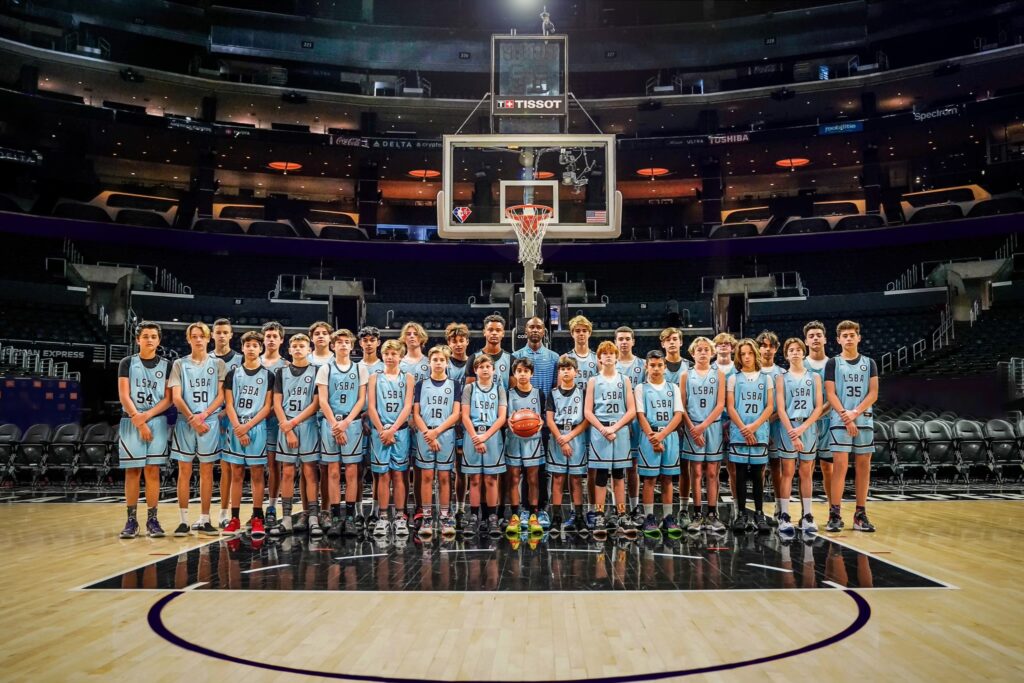
San Diego has never lacked for basketball talent. Walk into a middle school gym on a weeknight, or catch a weekend run in North County, Chula Vista, or along the central coast, and the same pattern shows up again and again. There are kids with quick first steps, kids who can score in bunches, kids who play with real edge. What separates the players who keep rising, though, is rarely flair. It is footwork, balance, defensive habits, passing angles, shot preparation, and decision-making under pressure.
That is where strong club programs make a real difference.
The best basketball club teams San Diego families look for are not simply travel schedules with uniforms attached. They are teaching environments. They give players the repetitions they cannot get in a short school season. They create game situations where habits either hold up or fall apart. They put athletes in front of coaches who can correct details before bad patterns harden into a player’s identity.
For parents, the phrase “fundamentals” can sound vague because nearly every program claims to teach them. In practice, the word has a very specific meaning. Fundamentals are the techniques and habits that show up in every possession, even when the player is tired, guarded, or rattled. A good club team does not treat those as warm-up material. It builds the entire player around them.
Why fundamentals still decide who plays
Watch enough youth basketball and a clear gap appears. Some players can dominate a local game with speed or size, but struggle when the competition gets longer, stronger, and more disciplined. Others may not stand out immediately, yet by high school they are the ones earning minutes because they rarely waste possessions.
That jump usually comes down to fundamentals.
A player who can dribble through cones is not necessarily a reliable ball handler. Real handling means staying low under pressure, protecting the ball with the body, changing pace instead of only changing direction, and recognizing when to advance the ball with the pass rather than overdribbling into trouble. The same goes for shooting. Plenty of young players can make open jumpers during relaxed drills. Far fewer can catch, square, and shoot with clean mechanics after sprinting from the weak side while a defender closes hard.
Club basketball exposes those weaknesses quickly. That is healthy when the coaching is right.
In San Diego, the level of competition can vary widely from one event to the next. A player might look polished in one tournament and overwhelmed the following weekend. Good coaches do not panic during those swings. They use them as teaching moments. When a guard picks up the dribble too early against pressure, that is a lesson about spacing, strength, and poise. When a wing gets beat backdoor three times in a half, that is not just an effort issue. It may be stance, vision, ball awareness, or a misunderstanding of help position.
The point is simple. Fundamentals are not theory. They are the practical answer to game problems.
What strong club coaching looks like in a San Diego gym
I have seen the difference between clubs that market basketball and clubs that teach it. The teaching programs look less impressive on social media and more impressive in the second half of close games.
You notice it in small details. Players stop on two feet instead of flying out of control. Guards know where their outlets are before they get trapped. Bigs do not slap at rebounds, they carve out space, chin the ball, and deliver an outlet pass on time. Defenders talk early instead of reacting late. Even bench behavior can tell you something. Well-coached teams tend to know what they are looking for, possession to possession.
A quality club coach in San Diego also understands the local landscape. Travel matters here. Families may drive long distances through traffic for practices and tournaments. School commitments are real. Multi-sport athletes are common, especially at younger ages. The best clubs account for that reality without lowering standards. They teach efficiently. They make practices organized, sharp, and worth the trip.
That kind of coaching usually includes correction that is immediate and specific. Not “play harder,” but “get your inside foot higher on the catch.” Not “box out,” but “hit first, turn, and pursue the ball with two hands.” Players improve faster when feedback is concrete.
The fundamentals that change games
When people talk about skill development, they often jump straight to scoring. Scoring matters, of course, but the strongest basketball club teams San Diego offers usually build from a broader base. They know that a player who can contribute in multiple ways stays on the floor longer.
Footwork comes first
Footwork is the hidden engine of almost everything in basketball. It affects shot balance, defensive slides, finishing angles, closeouts, pivots, and passes. Young players often want advanced dribble packages and step-back jumpers, yet many of their problems begin before the ball even moves. Their feet are too narrow, too upright, or late to the spot.
A club environment is valuable here because the repetition volume is higher. School teams often have limited practice windows and must prepare for the next opponent. Club teams, when structured well, can spend extended time on jump stops, pivots, jab series, change-of-direction mechanics, and defensive movement patterns. Those details sound basic until you see a player stop turning the ball over in traffic because they finally learned how to gather under control.
Passing is a skill, not a bailout
One of the easiest ways to spot advanced coaching is to watch how a team passes. Do players pass because they are stuck, or because they are reading the floor? Good teams move the ball on time and to the right target. That means passing to the shooting pocket, leading cutters properly, skipping weak side when help collapses, and recognizing when a simple pass is better than a flashy one.
A lot of young players in club basketball are trained to attack first and pass second. That can produce highlights, but it also creates stale offense. Teams that value fundamentals teach the pass as a weapon. In many San Diego tournaments, the clubs that win consistently are not always the most athletic. They are often the ones that make the extra pass, reverse the ball with purpose, and force the defense to cover one more action.
Defense is technique plus discipline
Parents sometimes think of defense as hustle alone. Effort matters, but defensive reliability is technical. Players need to know stance, angles, hand placement, closeout speed, help position, and communication rules. They need to understand when to contain, when to influence, and when to rotate.
This is where strong club teams can accelerate growth. Defensive mistakes repeat often enough in travel ball that patterns become obvious. A coach who knows how to teach can fix them. If a player lunges on every closeout, there is a footwork solution. If a post player gets sealed too deep, there is a battle for early position that has to happen sooner. If a team gives up straight-line drives, it may be a stance issue as much as a toughness issue.
Shooting development needs patience
Few areas in youth basketball get rushed more than shooting. Everyone wants quick results. Families want to see made threes and game clips. Coaches want spacing. Players want confidence. The problem is that changing mechanics while preserving rhythm takes time.
A good club program does not tear down every shot form for the sake of looking technical. It identifies what truly limits the player. Sometimes it is lower-body balance. Sometimes the guide hand interferes. Sometimes the release is fine, but the shot prep is slow. Smart coaches know the difference between a form quirk and a functional problem.
In San Diego, where many players compete year-round and may train outside team practices as well, communication matters. The best development happens when skill work and team coaching are aligned, or at least not working against each other.
What parents should notice before joining a team
Families often focus on tournament schedules, gear, and reputation. Those things matter less than they seem. The daily environment matters more. Before committing to a club, it helps to observe with a practical eye.
- Watch one practice before you watch one game.
- Listen for specific coaching, not constant generic shouting.
- Notice whether players are standing around or getting meaningful reps.
- Check how the team handles mistakes, especially after turnovers or missed assignments.
- Ask how player roles and development goals are communicated over a season.
A game can hide a lot. Practice usually tells the truth. If the gym is disorganized, if younger players spend long stretches inactive, or if every drill ends in contested one-on-one play without teaching points, that is useful information. On the other hand, a calm, demanding practice with clear progression usually signals substance.
Club basketball and the trap of early specialization
San Diego has enough basketball opportunities that ambitious families can fill nearly every weekend of the year. That is not always an advantage.
One of the most common mistakes I see is mistaking volume for development. More games do not automatically build better players. In fact, too many games can freeze a player in place if there is no time to improve underlying skills. The athlete simply repeats the same strengths and the same mistakes against different opponents.
At younger ages, especially before high school, there is real value in balance. Some athletes benefit from playing another sport for part of the year. Soccer can sharpen footwork and conditioning. Volleyball can help with timing and body control. Track can improve explosiveness. Even when a player stays focused on basketball, downtime and unstructured play still matter.
The better basketball club teams San Diego has to offer usually understand this trade-off. They want committed players, but they also know burnout is real. So are overuse injuries. So is the mental drag that shows up when every weekend carries the emotional weight of a college evaluation, even for kids who are years away from that stage.
How players actually improve during a club season
Most growth does not happen in dramatic leaps. It happens through accumulation.
A guard who used to pick up the dribble in traps learns to keep the live dribble one extra second. A forward starts screening with better angles and gets two more clean touches each game. A center who once relied only on size develops better timing as a rim protector. These are not glamorous changes, but they lead to bigger opportunities later.
The best clubs track this kind of progress informally, and sometimes formally. They know that improvement is more than points per game. They notice who is making faster reads, who is defending without fouling, who is talking earlier, who is rebounding out of area instead of only collecting easy misses.
I remember watching a younger wing in a local travel tournament who barely scored for most of the weekend. A casual observer might have written him off. But across four games, he cleaned up several possessions simply by sprinting back on defense, making the right low-man rotation, and swinging the ball quickly to the open side. By the end of the event, college coaches were not there for him, of course, but every knowledgeable coach in the gym could see that he understood how to play. Players like that tend to keep rising.
The role of competition in mastering fundamentals
Development and competition are often presented as opposites. In reality, each sharpens the other. Fundamentals learned in empty-gym workouts must survive live pressure. Competition reveals what is sturdy and what is cosmetic.
Travel basketball in San Diego gives players regular chances to test themselves against different styles. One team may pressure full court and force decision-making. Another may pack the lane and dare outside shots. Another may switch everything and expose weak screening habits. These matchups are useful because they show players which fundamentals travel.
A shooter may discover that footwork under pressure matters more than routine form. A post player may learn that sealing early creates better scoring chances than trying to back down from too far out. A point guard may realize that pace is a skill in itself. These lessons stick because they come from game consequences, not just coach talk.
Still, there is a balance to strike. A club team that only chases wins can stunt long-term growth. Some coaches tighten rotations too early, simplify offensive responsibilities, or tolerate bad habits from star scorers because the scoreboard rewards it in the short term. The developmental cost appears later, often when players reach stronger high school varsity levels and can no longer rely on raw ability.
What players should work on between team sessions
Club practice helps, but real improvement usually depends on what the player does when no coach is organizing the Basketball Club Teams San Diego hour. That does not mean every athlete needs a private trainer five days a week. It means they need purposeful reps and honest self-assessment.
The most productive players usually keep their individual work simple and consistent:
- Ball handling under pressure positions, not just stationary dribbles.
- Finishing off either foot, with either hand, through contact or awkward angles.
- Catch-and-shoot repetitions with game-speed footwork.
- Defensive slide and closeout mechanics that reinforce stance and balance.
- Free throws practiced while fatigued, not only when fresh.
Ten focused minutes every day often beats one long, unfocused workout at the end of the week. Young players especially respond to routine. If a middle school athlete builds a steady habit of touch shots, ball security work, and footwork, the gains show up quickly over the course of a season.
Parents can help here by keeping expectations grounded. Improvement is rarely linear. A player may work hard on mechanics and temporarily shoot worse in games while adjusting. That does not always mean the work is failing. Sometimes it means the body is learning a better pattern.
San Diego’s basketball culture can be an advantage, if families choose carefully
One reason club basketball has grown so much in this area is that San Diego offers a strong mix of facilities, coaching backgrounds, and year-round playing weather. Players can train, compete, and stay active consistently. That is a real asset.
But a strong market also creates noise. There are many programs, and not all of them define development the same way. Some operate with clear teaching philosophy and stable coaching. Others rely on branding, social clips, or promises about exposure that are hard to verify. Families should be wary of any club that talks constantly about being elite but cannot clearly explain how it teaches.
Exposure follows competence more often than marketing. High school coaches and, later on, college coaches notice players who defend, communicate, handle physicality, and make good decisions. Those traits are built through fundamentals. They are not purchased through a travel schedule.
That matters especially for younger families entering the club scene for the first time. The goal at age 11 or 13 should not be to look advanced. It should be to become sound. Players with a strong technical base have far more room to grow later. Players built on hype and shortcuts often plateau early.
When a club team is the right fit
Not every player needs club basketball immediately, and not every season is the right season to join. Sometimes a child still needs to fall in love with the game in a lower-pressure setting. Sometimes school basketball and recreational reps are enough for the moment. Sometimes family logistics make the club schedule unrealistic, and that matters too.
But when a player wants more structure, more competition, and more serious coaching, the right club team can be a turning point. It can sharpen habits, build resilience, and teach what winning basketball actually looks like beyond scoring totals.
The best basketball club teams San Diego players join tend to have a few common qualities. They teach before they advertise. They develop roles, not just stars. They respect fundamentals enough to return to them constantly, even with talented rosters. And they understand that long-term growth often looks quieter than weekend hype.
For players, that means learning how to move, think, and compete the right way. For parents, it means choosing environments that value substance over buzz. For coaches, it means staying committed to the unglamorous work that produces dependable athletes.
That work is rarely flashy. It is also the reason some players are ready when the game speeds up.
Lamont Smith Basketball Academy
888 Clairemont Mesa Blvd Suite T-2, San Diego, CA 92123
(619) 639-8778
FAQ About Basketball Club Teams San Diego
How can a player join an LSBA club team?
Players are evaluated during practices so the coaching staff can recommend an appropriate team and development level. Families should contact the academy to confirm current openings and evaluation details.
Are club teams available for newer basketball players?
Yes. LSBA describes multiple levels, including a developmental option for newer players as well as more competitive teams for athletes with prior club experience.
What do LSBA club team practices emphasize?
Practices emphasize basketball fundamentals, team defense, structure, communication, and player development. The specific focus may vary according to the team and experience level.
Do all LSBA teams travel?
Travel expectations vary by level. Some teams focus on local competition, while advanced teams may participate in tournaments elsewhere in Southern California or beyond. Families should confirm the current schedule before enrolling.